Does the Sequel Stick the Landing? Planet of Lana II Review
The sequel to Planet of Lana, the highly loved indie platformer, is out now. How does the sequel hold up on its own?

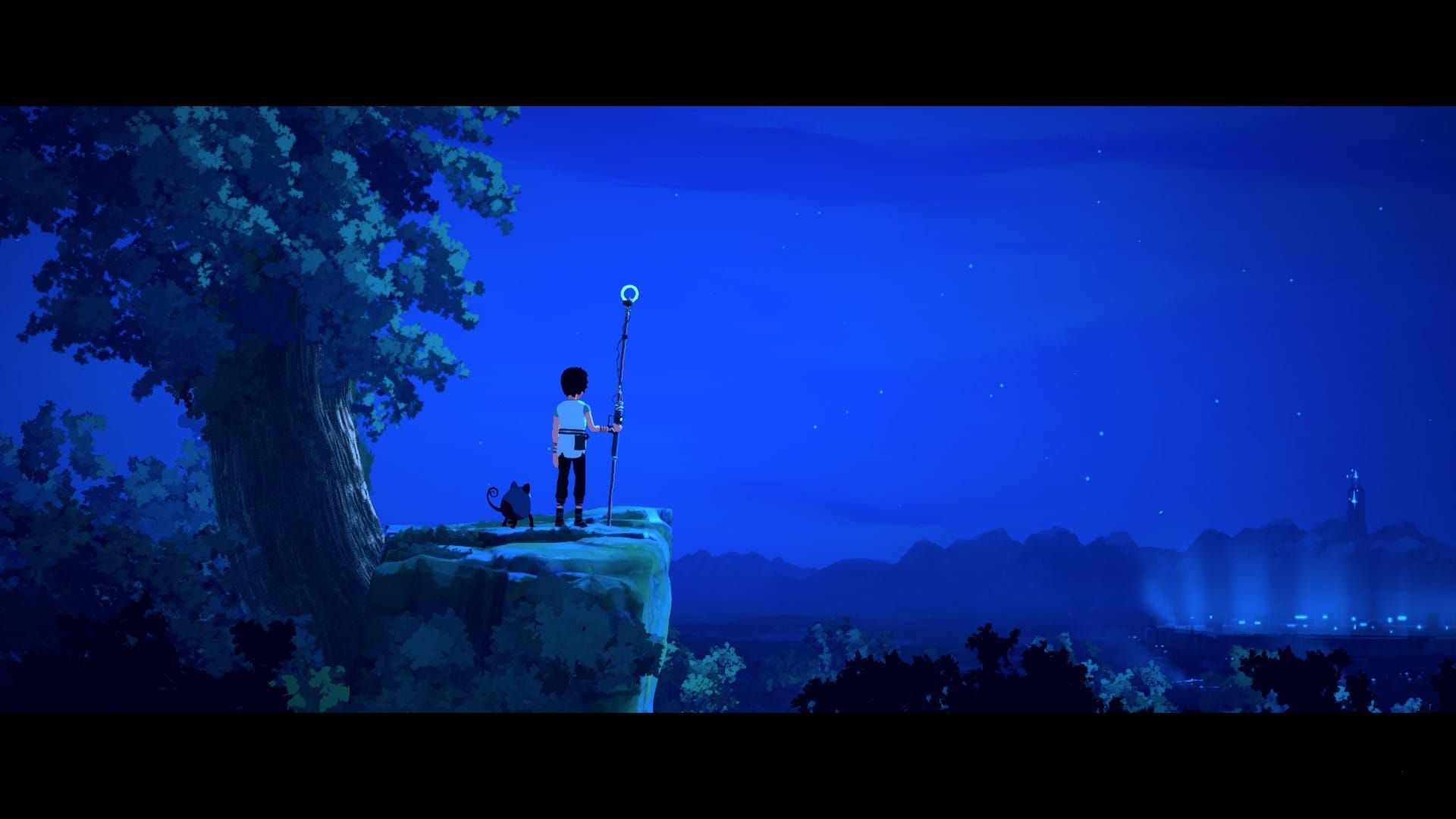
The long-awaited sequel to Planet of Lana has been released to positive reviews. Jump into a puzzle-filled adventure, no matter if you played the original title or not. Since the game is heavily story-driven, I don’t have much to preface this review with, so let’s just jump in.
General
Let’s start with a general overview of the game. You play as Lana, a young girl, and her void cat blog thing named Mui. Living on a planet being overrun by technology, you leave on a quest to find medicine to reverse the deadly effects of toxic gases.
The main issue is that each portion of the medicine is deep in dangerous areas. You will need to traverse wintery mountains, swampy villages, and enemy compounds. Each has its own puzzles intertwined into the platforming sections, giving each chapter its own identity.
For a lot of the puzzles, you need to make use of both Lana and Mui’s skills. Lana can climb up platforms, turn dials, and hack into stolen technology. Mui can power down the electric switches and knock down drones for Lana to hack. Combining these two is the key to solving the puzzles and progressing through the scenes.
Positives
So, let’s start off with the things I liked about the game.
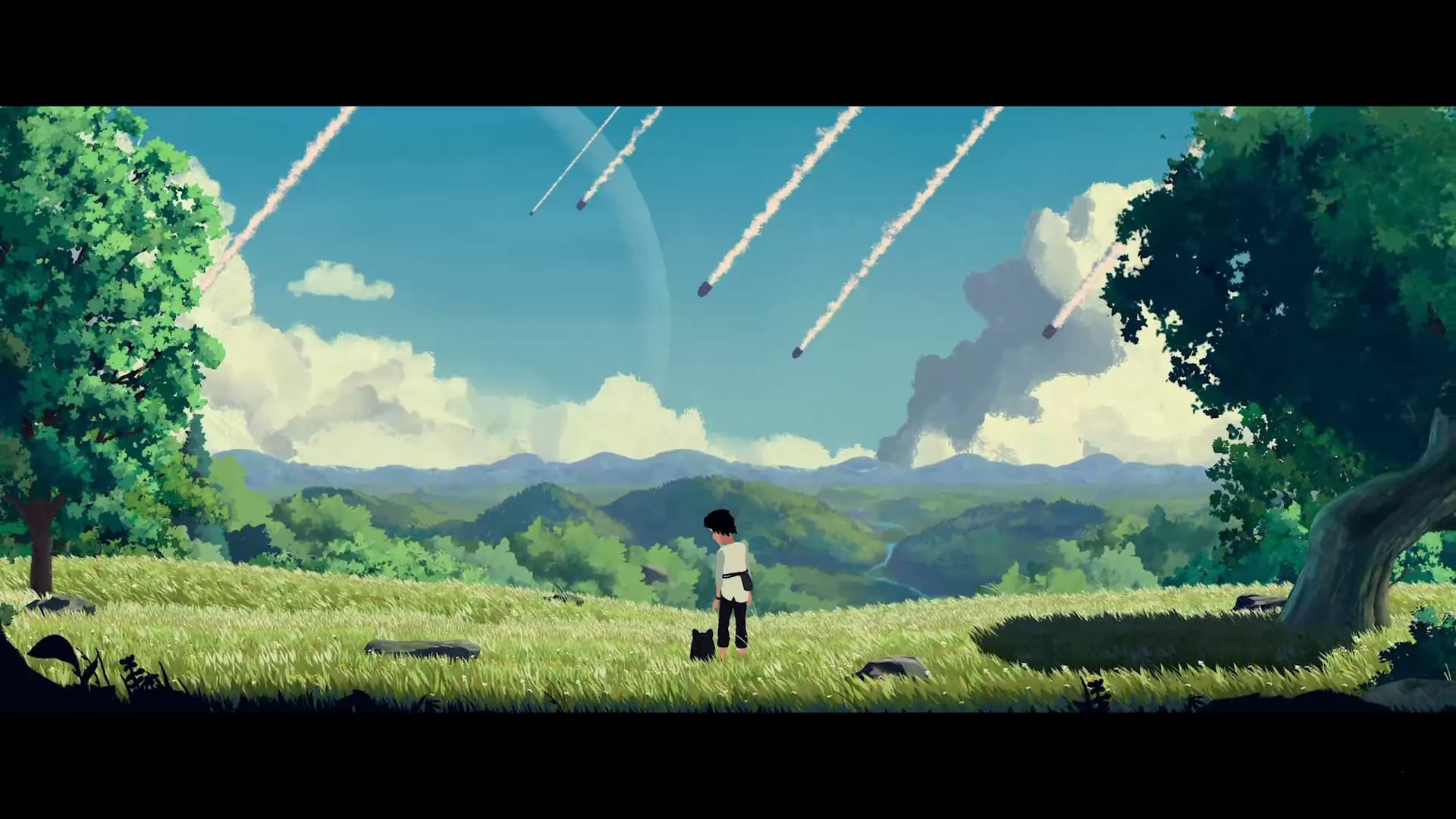
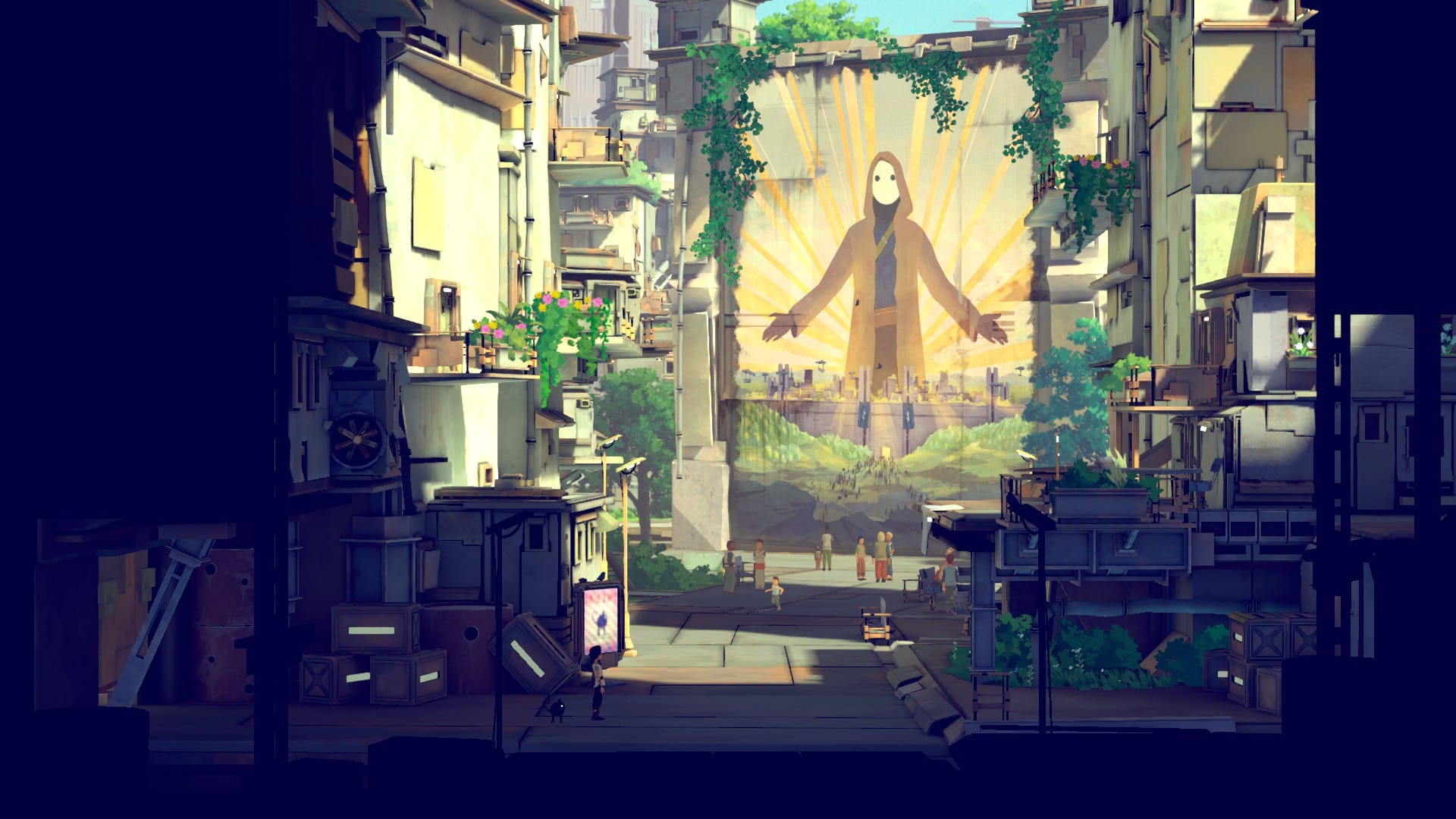
To start, before the gameplay even started, the background was gorgeous. The art is all hand-painted according to the Steam page, and it is one of the best parts of the game. It allows the world to become alive in the villages filled with people, and feel cold and sterile in the enemy compounds.
This bleeds into the different zones you visit. They are all so unique. They have their own enemies, allies, and environmental hazards to watch out for. The way the scenes play out reminded me heavily of how the first two Little Nightmares games played, and that really added to my enjoyment of the puzzles and trying to figure out how to solve them.
As you go through each part of the game, there will be cutscenes to show more of the story. There is also an option to skip the cutscenes, and I love when this is an option. Mainly because there are a lot of missable achievements, so if you are an achievement hunter who is trying to 100%ing the game, skipping cutscenes that you’ve already seen in the original playthrough. Apart from the opening scene, all of the dialogue and in-game writing is in a made-up language - much in the same vein as games like Tunic. I really like it when games can pull this off well, and I 100% think Planet of Lana does this incredibly well. Even though the characters' faces aren’t very detailed, the body language conveys the emotions so well that facial expressions aren’t needed.
One thing that is important for story-driven games is pacing and sectioning the story. Planet of Lana does this by dividing the game into chapters. I think this is a great way to make everything digestible, and also, much like in a book, it helps with pacing, giving you natural points to pause. This is also where you will jump stories. Most of the game is played in the present, with Lana as she hunts down medicine. But there are also chapters where you play as only Mui and see the side of society where humans and androids live together peacefully. This shows the good and bad sides of integrating technology and greed-consuming humanity.
Before starting this game, I was worried that I wouldn’t be able to get the full satisfaction of the sequel because I had never played the first game. I am happy to report that I was able to understand the whole game; I never felt like I was missing some type of context. There might have been easter eggs woven in that I couldn’t see, but that is never a negative for me.
Negative
Now that I’ve covered what the game does well, let’s move to the things I don’t love.
The first thing that caught my attention was the difficulty for me to see some of the puzzles. There were multiple aspects of puzzles that were scattered around the scene, and it can be incredibly challenging to see the level or the object that I need to interact with. Now there are multiple parts where yellow flowers mark grabable handles on walls; this is great. It weaves into the environment and doesn’t look out of place, but does give a clear mark to lead the player. I wish this were included for puzzles as well because there were multiple sections where something blended into the background, and I couldn’t see that I could interact with it.
The second issue I have is movement. I have issues with both characters and how I can or have to move them. Lana can be stubborn when it comes to turning. Trying to get her to back up to get the interaction prompt to pop up can be a painful experience. There are multiple sections that you have Lana swim, and to get out, she has to grab the ledge and pull herself up, the ability to grab the ledge isn’t always consistent. The swimming as a whole gets added to my dislike of water levels. Lana’s clunky movement is only amplified in the water. Being able to move in all four directions means that any time she turns - or god forbid, prompts an interaction - feels clunky and sometimes impossible. The lack of smooth movement or slow timing for pulling away boards from a pathway or climbing up a ledge resulted in many deaths that I didn’t always see as fair.
For Mui, they are controlled through moving a pointer, and they will go to that place if possible. They have a great jump and can reach incredible heights. They will be the helper to get up to high places to turn off traps or help open doors for Lana. The main issue is that there are many times when I need to control Lana while also having Mui turn off time-based enemies; this was incredibly stressful because of the way to activate Mui’s laser pointer. I would also be so focused on moving Lana away from danger after Mui deactivated an enemy, I would think I clicked their follow button, but I didn’t, and ended up getting a death screen. This ties into my last issue, and that is the long and slow death screen and respawn timer. The number of ways you can die is abundant, and it feels like an eternity before you can try again. I wish it were snappier. I think it would have prevented a lot of frustration.
Ending
I think this game was fine. I think my expectations were too high, and that maybe I should have played the first game because I was hearing so many good things, it might have heightened my thoughts on what a sequel would have.
I feel like I got a decent amount of satisfaction out of the game. In terms of recommending it to someone, I think they would need to be more invested in the storytelling compared to wanting a great platforming or puzzle experience.
Score: 2 out of 5 stars
Platform: Steam (Desktop)